Signals
iOS app, in distribution
The iOS app is built and in private distribution — not on the public App Store, reached only by a verified organisation (its org ID). Three things to know — then a screen for each thing it does.
- Five panels and a chat. That's the whole app — a deliberately low learning curve.
- Two main goals: pocket automations and mini apps.
- One private tunnel in. The app reaches its brain through a private tunnel — nothing to set up, nothing to manage. It just works.
Turn any idea into something operational. Here's one of each.
Pocket automation use case
Connect an account once, ask once. One line in the app — pick the connector, say what you want:
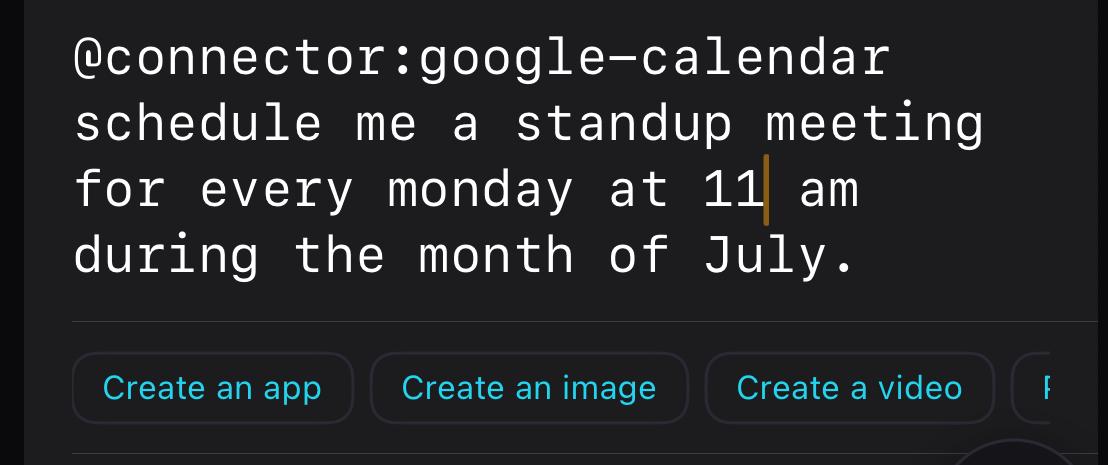
And the month comes back booked — a standup on every Monday in July, written straight to the calendar.

Mini app use case
Ask for an app the same way — plain words, one line:
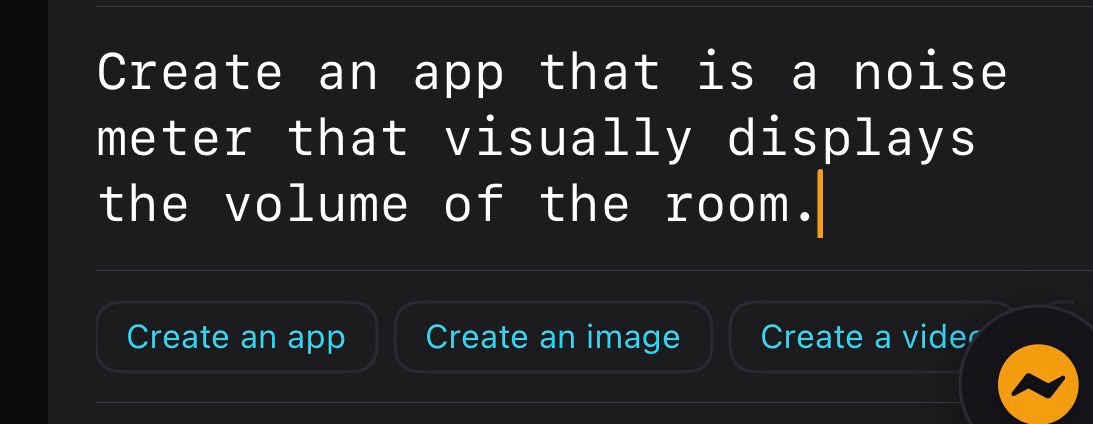
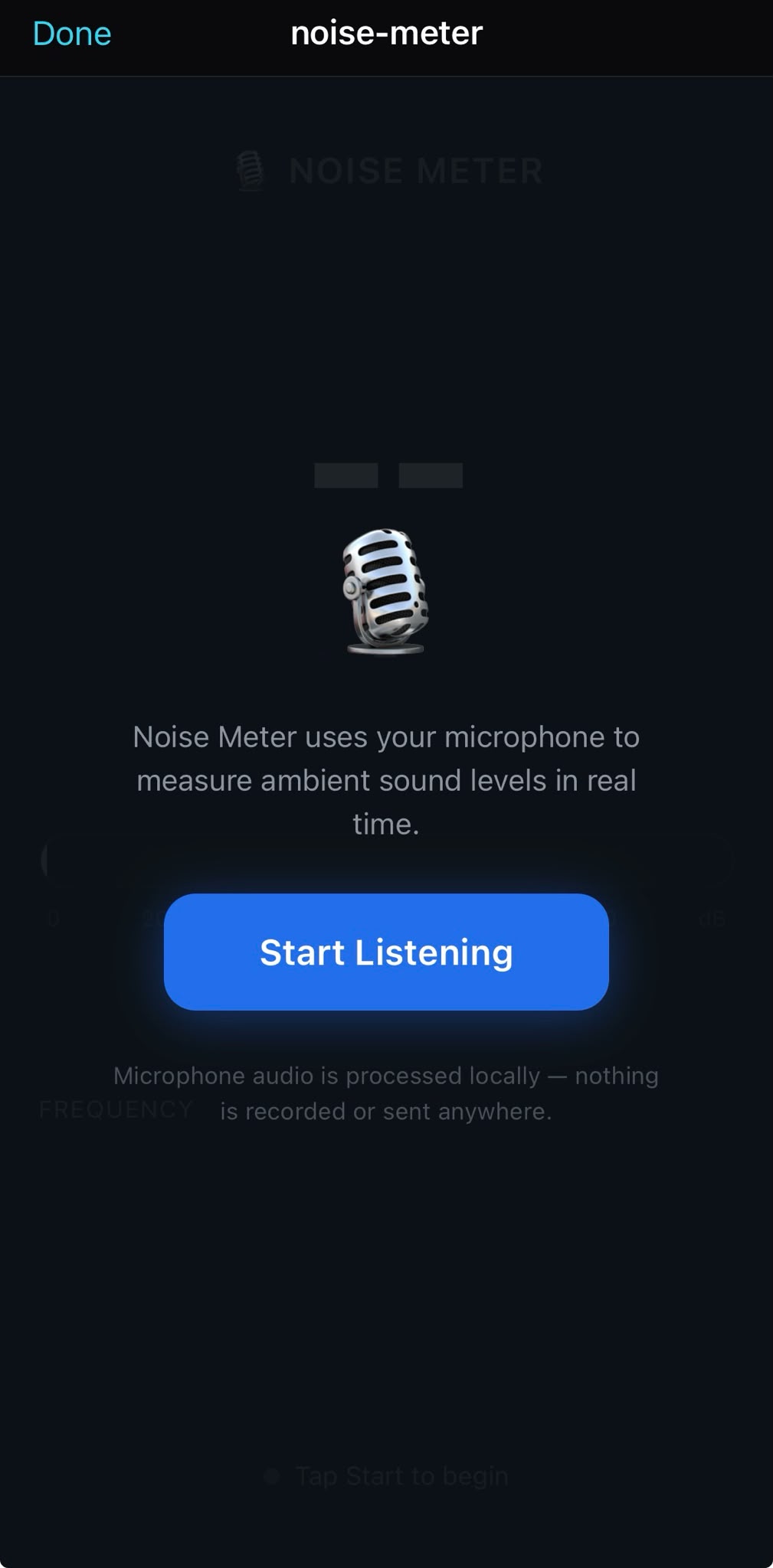
And it comes back as a working mini app, living in the app — your own button for the next time, no re-typing.
How it reaches your team
None of this ships on the public app stores. iOS is distributed privately, to a named organisation, through Apple Business Manager and pushed to devices with an MDM — more on why here. Android is already built, and headed for its own private route — through Android Enterprise.
To be continued: federated access for organisations — each one reaching the app on its own terms.
A final note — on mini apps
The mini app is a simplified app maker, tailored to whatever a team does — surface a blog's entries on your phone, build from a web scrape, tap the phone's sensors, a game, a simulation, a quick calculator. The range is whatever the app can already do.
The unlock is mobility. With a voice flow, anywhere in the world, you can speak the app you want and have it back over a private connection — no trip to a computer, no overcomplicating. A clear step past what Telegram can do.
And these are discardable by design — add one to your home screen, reuse it, change it, drop it when you're done — with a versioned maker that gets better each release. What's coming next is more powerful still, tuned for everything you'd ask an AI to do.
Bring it to your organisation
Join the waitlistSinais
App iOS, em distribuição
A app iOS está construída e em distribuição privada — não na App Store pública, acessível apenas a uma organização verificada (o seu org ID). Três coisas a saber — depois um ecrã por cada coisa que faz.
- Cinco painéis e um chat. É essa a app toda — uma curva de aprendizagem deliberadamente baixa.
- Dois objetivos principais: automações de bolso e mini apps.
- Um túnel privado de entrada. A app chega ao seu cérebro através de um túnel privado — nada para configurar, nada para gerir. Simplesmente funciona.
Transforme qualquer ideia em algo operacional. Aqui fica um exemplo de cada.
Caso de uso de automação de bolso
Ligue uma conta uma vez, peça uma vez. Uma linha na app — escolha o conector, diga o que quer:
E o mês volta marcado — um standup em todas as segundas-feiras de julho, escrito diretamente no calendário.
Caso de uso de mini app
Peça uma app da mesma forma — palavras simples, uma linha:
E volta como uma mini app funcional, a viver dentro da app — o seu próprio botão para a próxima vez, sem voltar a escrever.
Como chega à sua equipa
Nada disto é publicado nas lojas de apps públicas. O iOS é distribuído de forma privada, a uma organização nomeada, através do Apple Business Manager e enviado para os dispositivos com um MDM — mais sobre porquê aqui. O Android já está construído, e a caminho da sua própria rota privada — através do Android Enterprise.
Continua: acesso federado para organizações — cada uma a chegar à app nos seus próprios termos.
Uma nota final — sobre mini apps
A mini app é um criador de apps simplificado, feito à medida do que uma equipa faz — mostrar as entradas de um blog no seu telemóvel, construir a partir de um scrape da web, usar os sensores do telemóvel, um jogo, uma simulação, uma calculadora rápida. O alcance é tudo o que a app já consegue fazer.
O desbloqueio é a mobilidade. Com um fluxo de voz, em qualquer parte do mundo, pode dizer a app que quer e recebê-la de volta por uma ligação privada — sem ir a um computador, sem complicações. Um passo claro para lá do que o Telegram consegue fazer.
E estas são descartáveis por design — adicione uma ao seu ecrã inicial, reutilize-a, mude-a, descarte-a quando terminar — com um criador versionado que melhora a cada lançamento. O que vem a seguir é ainda mais poderoso, afinado para tudo o que pediria a uma IA.